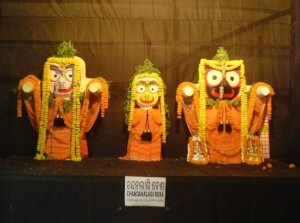
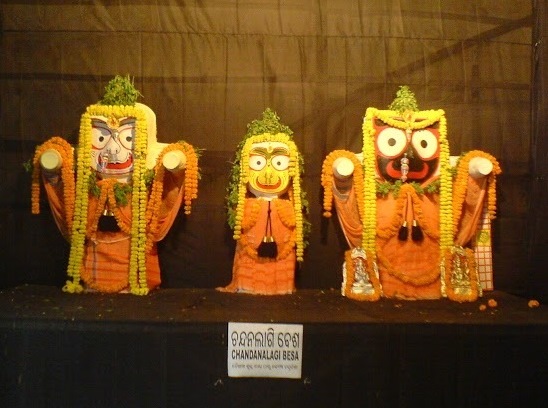
The word ‘Vesa’ (in Sanskrit as also in Oriya) means, dress. It is a common feature with all the temples that deities are dressed and decorated daily. On special occasions the deities are also dressed and decorated in suitable manner. The same is also . the case with the deities in the Puri temple. There are particular persons belonging to the temple services who know the traditional ways of dress and decoration. Flowers, tender leaves, silken fabrics, golden ornaments etc. constitute the materials with which the deities are dressed. Sandal wood paste, musk, camphor etc. are also adequately used. Out of the several dresses, mention may here be made of only a few.
Chandana Bhesa
Hati Bhesa
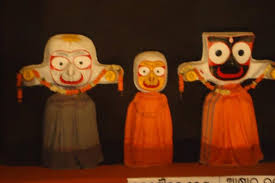
Nava Youvana Bhesa
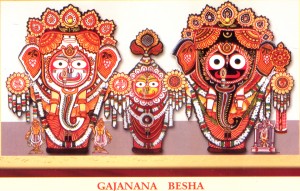
Immediately after the day of Snana Purnima the deities remain unseen for 15 days. Thereafter, on the eve of Ratha Yatra they are gorgeously dressed and pay darsan to the visitors. They put on very charming robes and look like persons at the commencement of their youth. (Nava Youvana).
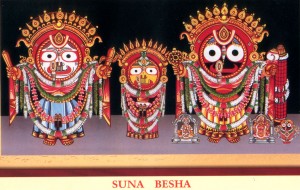
Suna Bhesa
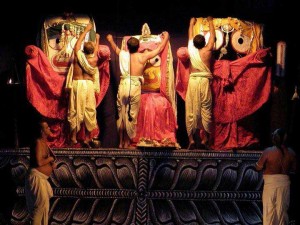
Chitalagi Bhesa
Vana Bhoji Bhesa
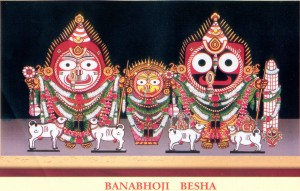
Since Jagannatha has been identified with Krisna, incidents connected with the life of the latter have been inseparably associated with Jagannatha. Krisna used to go to the forests with his companions, who were decorating him with the tendrils of the creepers, flowers and tender leaves of different colours. Keeping this incident in view, Jagannatha is dressed in the month of Bhadra in the befitting manner.
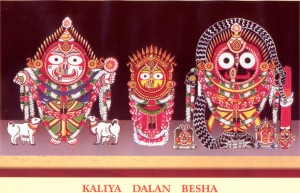
Kaliyadalana Bhesa
In the story of Krisna, Kaliya, the venomous viper, living on the banks of Yamuna was a source of great danger to the people and Krisna had killed it. To remind this incident in the month of Bhadra this Bhesa takes place. The actual scene of killing the demonlike snake is dramatised in the sacred tank of Markanda.
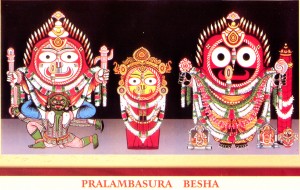
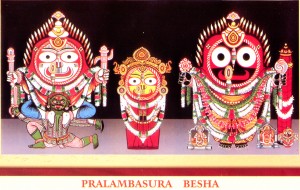
Pralambasura Vadha Bhesa
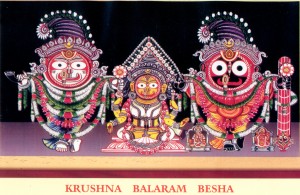
Krisna Balarama Bhesa
Vamana Bhesa
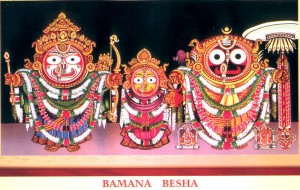
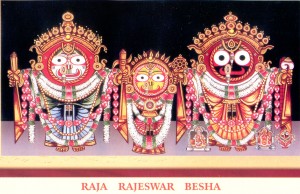
Raja Bhesa
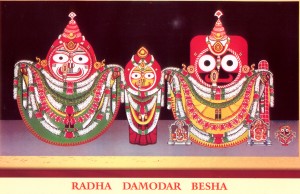
Radha Damodara Bhesa
Harihara Bhesa
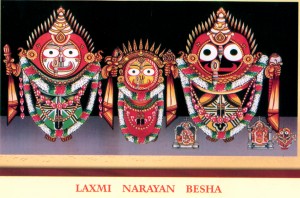
Laksminarayana Bhesa
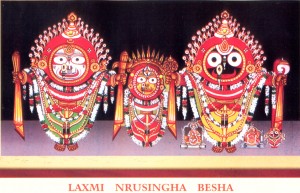
Laksminrsimha Bhesa
Nagarjuna Bhesa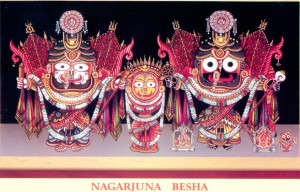
This Bhesa takes place in such years as have six days of Panchuka in the month of Kartika. On that occasion Jagannatha is dressed like Nagarjuna (a military general) on the extra day. This Bhesa is also known as the Parasurama Bhesa.
Sraddha Bhesa
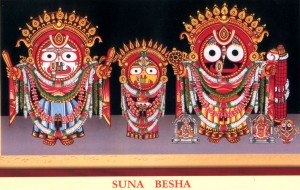 Jagannatha puts on this Bhesa in the month of Margasira for three days. Sraddha means the offerings made out of love and hence, such rites as are observed for the departed parents and forefathers are called Sraddha. In the month of Margasira, Jagannatha performs the Sraddha in favour of Nanda, Vasudeva and Dasaratha. We know that Visnu was born as the eldest son of Dasaratha, the King of Ayodhya and was named Ramachandra. Again his birth took place in a prison in Mathura as the son of Vasudeva from where he was mysteriously taken out and delivered to Nanda (the king of Braja), who nourished him like his own son and came to be known popularly as the second father of Krisna.
Padma Bhesa
Gajoddharana Bhesa
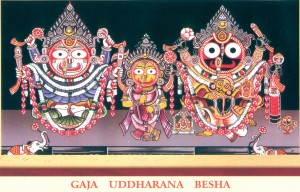 There is a story in the Puranas that at one time in the past, an elephant was attacked by a ferocious alligator. Finding no other way to save his life, this animal implored the mercy of Visnu. His prayers immediately moved Visnu to compassion and the latter hurled his disc to cut the attacking alligator to pieces. Jagannatha, who is identified with Visnu, wears this Bhesa to inspire a sense of devotion to the grace of the god.